
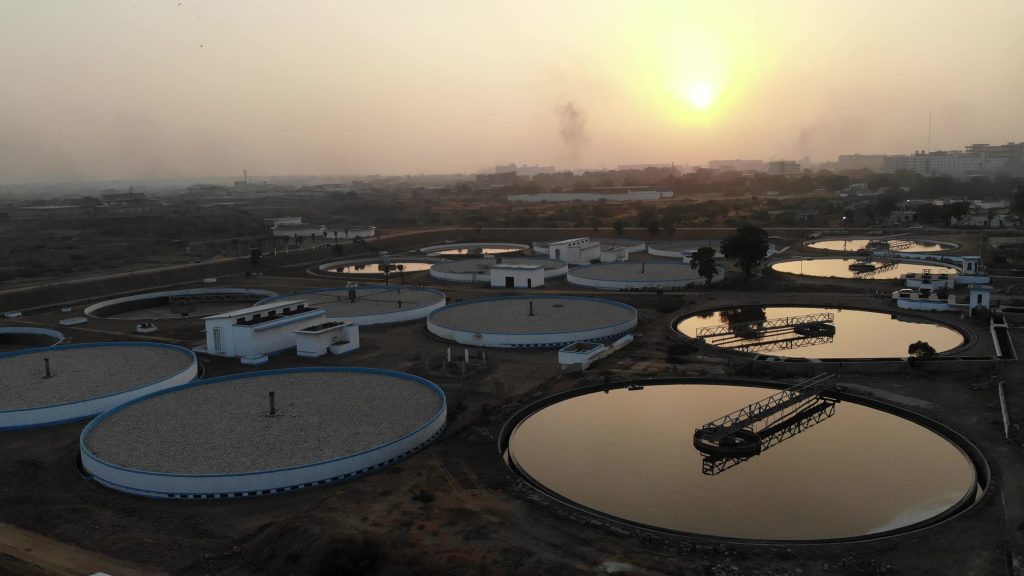
SEWAGE TREATMENT PLANT (TP III) MARIPUR
The Sewage Treatment Plant-III (TP-III) at Mauripur (Maripur), Karachi is a major wastewater treatment facility under the Greater Karachi Sewerage Plan (S-III) aimed at improving the city’s sewage management and reducing marine pollution. The plant previously treated about 54 million gallons per day (MGD) of wastewater and is being upgraded to a capacity of 180 MGD to handle sewage from the Lyari River basin. The project includes trunk sewer pipelines and infrastructure to intercept untreated sewage before it reaches the Arabian Sea. Once fully operational, TP-III will help protect Karachi’s coastal environment, recycle treated water for industries, and support sustainable urban water management in Pakistan’s largest city.
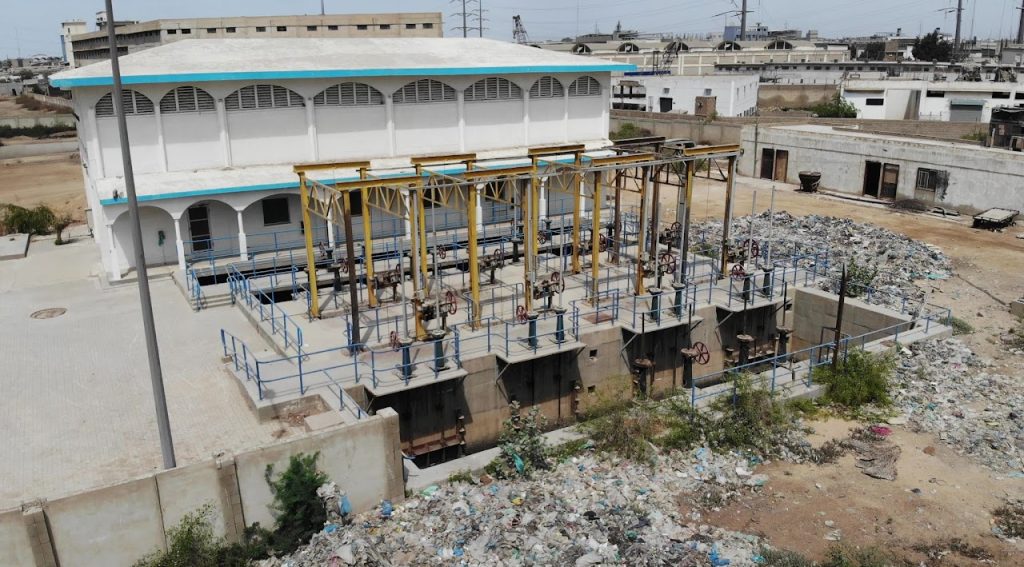
Main Pump Station
Pumping Waste Water from city waste water lines to the project for treatment and filtration.
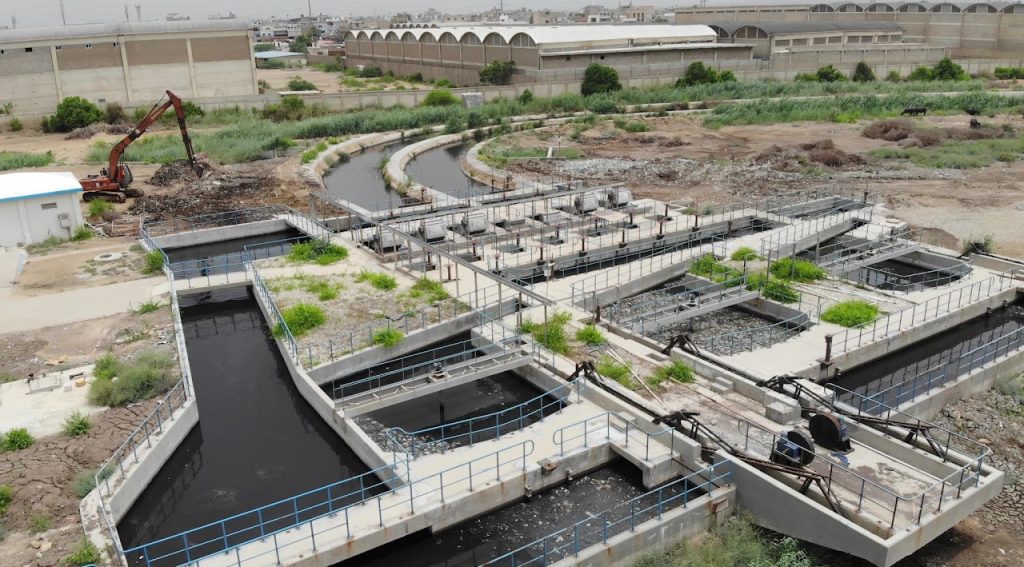
Fine Screen
Fine screens are critical preliminary treatment components in wastewater plants that remove small, non-biodegradable solids like plastics, hair and fibers usually following coarse screening.
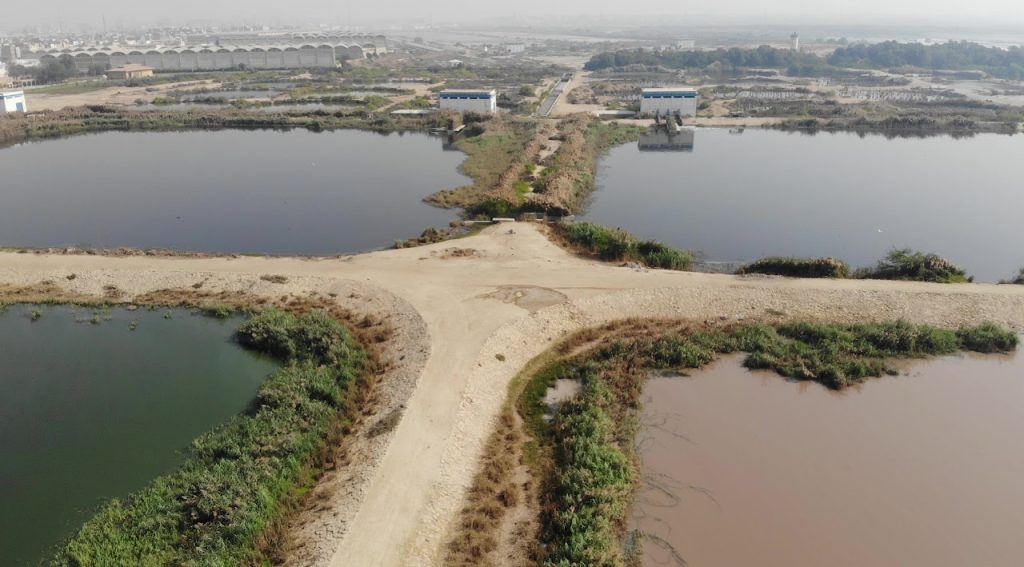
Anaerobic Lagoon
Anaerobic lagoons are deep, oxygen-free basins that serve as the primary, high-rate treatment step for treating high-strength industrial and agricultural wastewater, reducing 60-90% of BOD. They act as large-scale, low-cost digesters that decompose organic matter using bacteria, converting sludge into methane-rich bio-gas while settling solids.
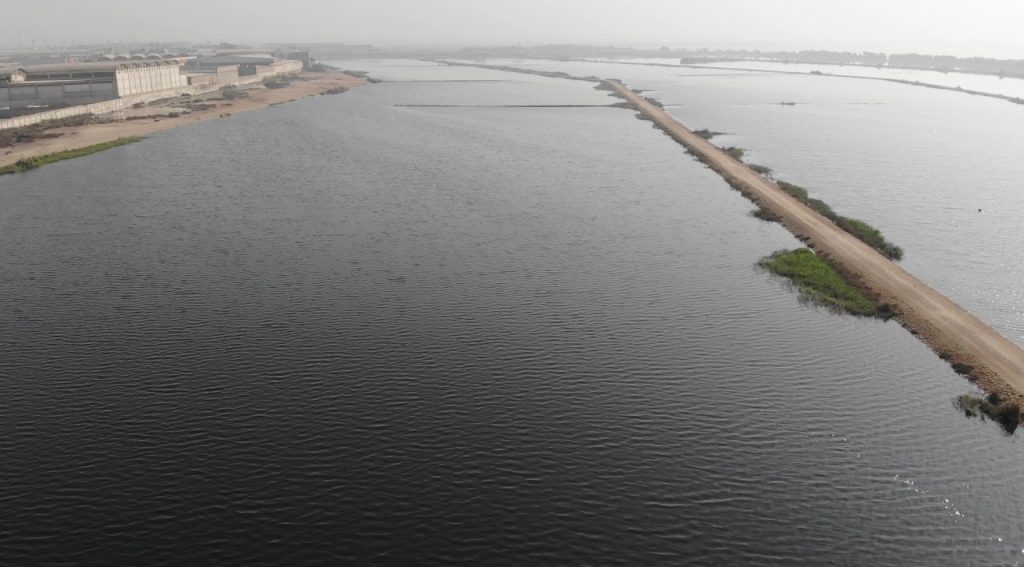
Facultative Lagoon
Facultative lagoons are shallow, 1.2 to 2.4-meter-deep engineered ponds that provide cost-effective, low-maintenance, long-term biological treatment of wastewater, relying on natural processes. They use a stratified system—aerobic surface, facultative middle, and anaerobic bottom—to break down organic waste through algae and bacteria, making them ideal for rural sewage treatment.
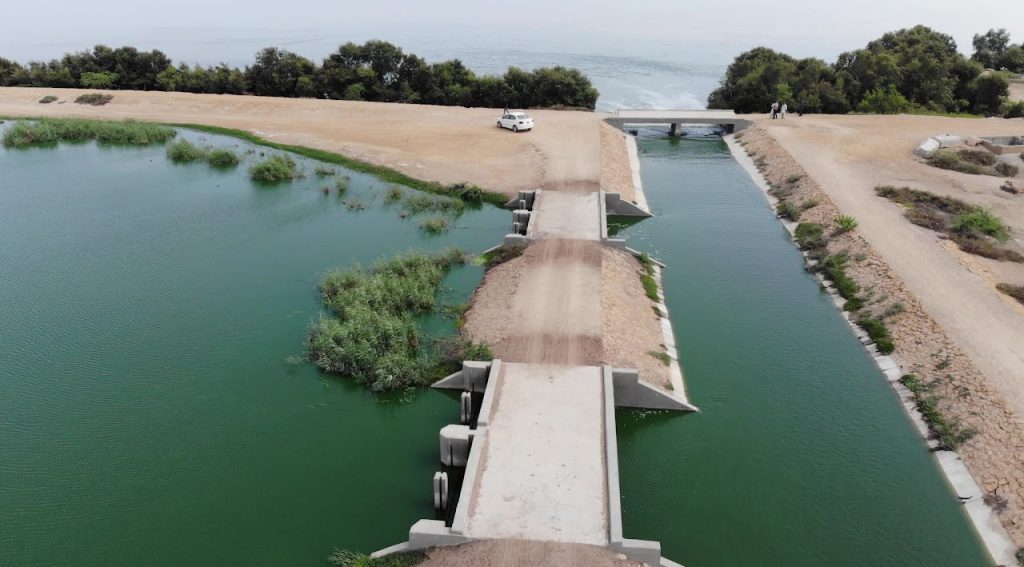
Treated Water Exit Channel
The treated water effluent exit channel (or final effluent channel) acts as the last, critical link in the wastewater treatment process, serving as the conduit for transporting purified water from the final clarifiers to the receiving environment (ocean). It ensures that the treated water is safely returned to the water cycle.